Think Global. Build Locally.
We're solving Africa's education crisis by multiplying teaching capacity 30X faster and 10X cheaper than traditional approaches. Through AI-powered community learning pods, we're bringing world-class STEM education to every child— regardless of geography, income, or access to certified teachers.
This isn't just EdTech. It's a movement to unlock Africa's next generation of innovators, builders, and leaders.
Africa's Education Crisis Is a Global Imperative
The Crisis
80% Learning Poverty: 8 out of 10 African children can't read or perform basic math by age 10
15M Teacher Shortage: Africa needs 15 million new teachers by 2030; training takes 4+ years
Geographic Inequality: Quality STEM education trapped in urban centers

Why STEM Matters
The Future is Technological: AI, robotics, coding = survival skills for 21st century
Africa's Youth Dividend: 60% of population under 25—opportunity or crisis?
Local Innovation: African youth solving African problems = sustainable solutions
The Opportunity
Technology Changes the Game: AI delivers expert instruction at scale
A New Model is Possible: One facilitator + AI = 10 teachers
The Time is Now: Every year we wait, another cohort falls behind
This is the challenge we're built to solve. And it's personal.
From Mali to Harvard to 600+ Students:
Why This Mission Is Personal
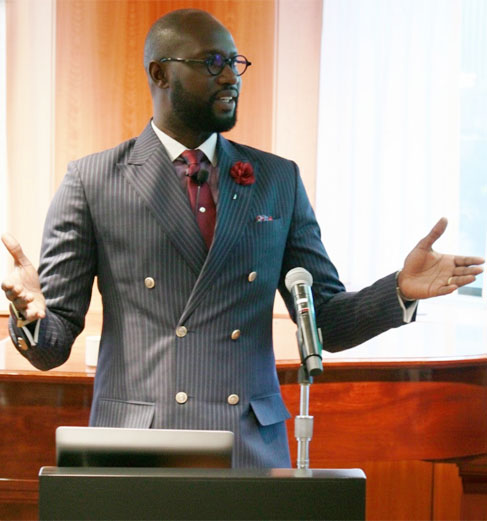
The Early Years: Mali Mohamed Traoré Kante grew up in Mali, where access to quality STEM education was a privilege, not a right. He saw firsthand how talent and potential were wasted not for lack of ability, but for lack of opportunity. The brightest minds in his community had no pathway to develop their skills, no role models in technology, and no vision for what they could become.
The Breakthrough: Harvard & Dell Mohamed's journey took him from Mali to Harvard University, where he earned his Master's degree, and later to Dell Technologies, where he worked in the office of the Chief Technology Officer (CTO) as a principal engineering technologist. But even as he built his career in tech, one question haunted him: What about the kids I left behind?
The Proof of Concept: Team Mali In 2017, Mohamed founded Team Mali—Africa's first robotics team. Against all odds, Team Mali competed at the FIRST Global Challenge and won silver. The world took notice. But more importantly, Mali's youth saw what was possible.
That moment proved something critical: African youth don't lack talent. They lack access.
The Validation: Dell Solar Learning Labs Building on Team Mali's success, Mohamed partnered with Dell Technologies to launch the Dell Solar Learning Labs, bringing STEM education to underserved communities across Africa. Over 600 students participated, learning coding, robotics, and critical thinking in spaces that met them where they were.
The results were undeniable. But Mohamed also saw the limits: summer programs couldn't scale to millions. Traditional teacher training couldn't keep pace with demand. Infrastructure costs made expansion prohibitively expensive.
The Breakthrough Insight: The Teacher Multiplier The question became: How do we deliver expert STEM instruction to every child without waiting decades to train millions of teachers?
The answer: AI + community facilitators + learning pods
One community member, powered by AI, could deliver the impact of 10 traditional teachers. Learning pods in homes and community centers could reach students traditional schools never would. And by starting with communities that believed in the mission, iNERDE could prove the model worked then scale.
Today: iNERDE Academy Mohamed founded iNERDE Inc. (a 501(c)(3) nonprofit) to turn this vision into reality. With backing from Dell, Gates Foundation, UNESCO, and Silicon Valley Community Foundation, iNERDE is launching the Teacher Multiplier Model at scale, starting with 10 learning pods in Bamako, Mali, and expanding to reach 1 million STEM alumni by 2030.
This isn't just Mohamed's story. It's the story of every African child who deserves a shot at the future.
"I built Team Mali to show what's possible. I built iNERDE to make it inevitable."
Mohamed Traoré Kante (Founder & Executive Director)
From Idea to Impact: Our Journey
2017:
Team Mali is Born
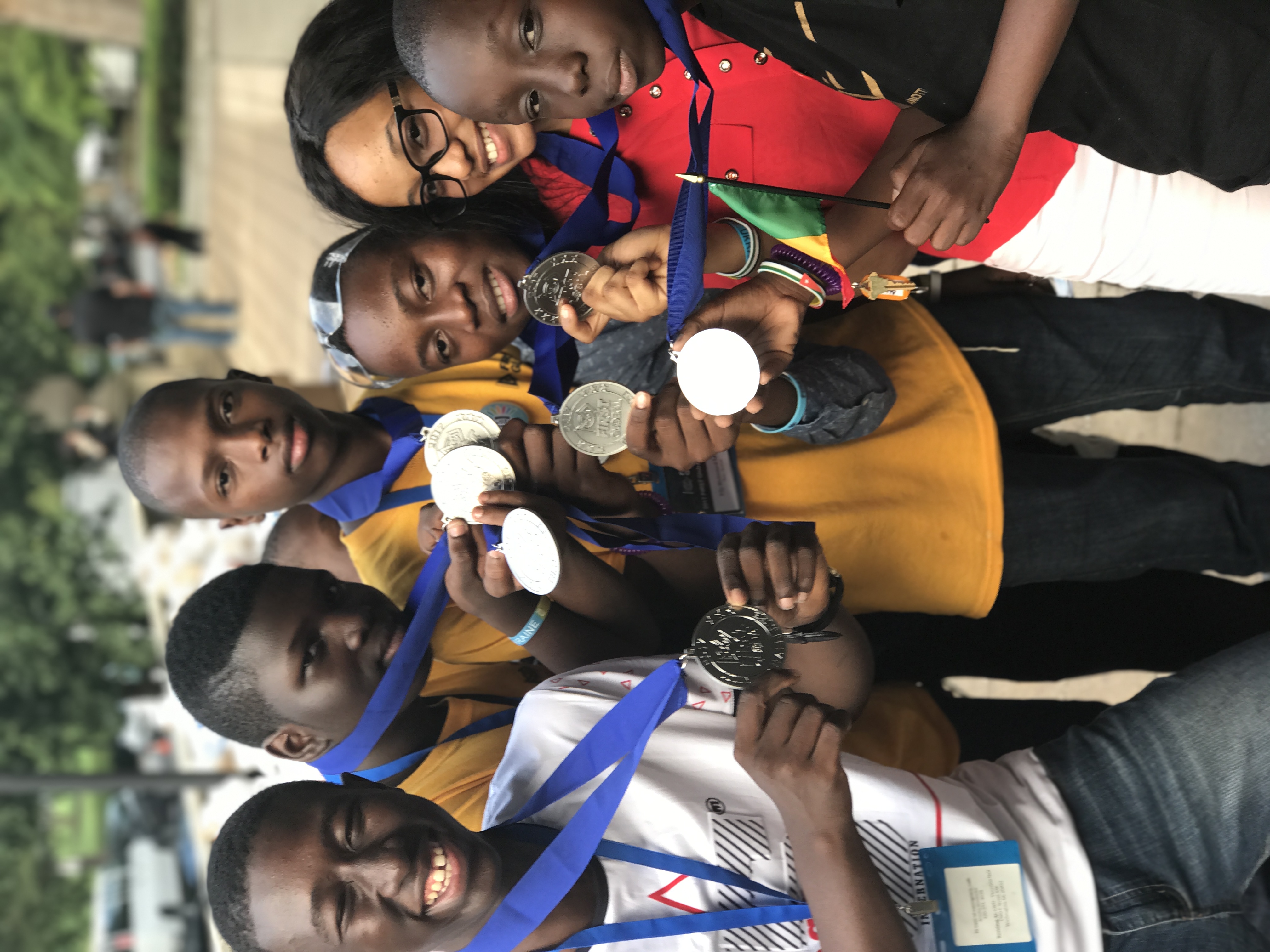
Africa's first robotics team competes at FIRST Global Challenge
Wins silver medal, proving African youth can compete globally
International media attention puts Mali on STEM education map
Impact: Inspired a generation of young Malians to see themselves as technologists
2017-2020:
Dell Solar Learning Labs
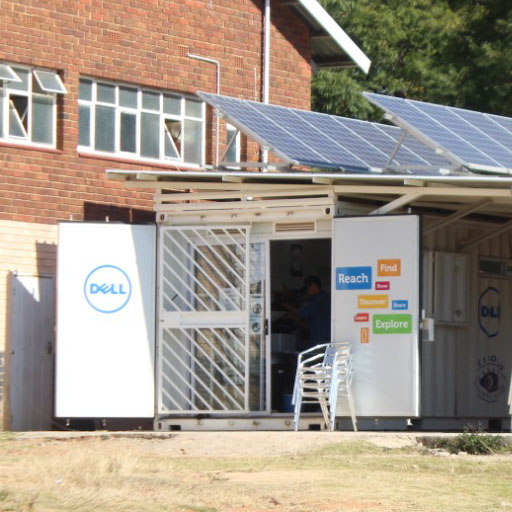
Partnership with Dell Technologies launches community STEM programs
Solar-powered learning labs reach underserved communities
600+ students trained in coding, robotics, digital literacy
Programs expand across 10+ countries
Learning: High-quality STEM education IS possible in resource-constrained environments; but traditional models can't scale fast enough
2021-2023:
Building the Platform
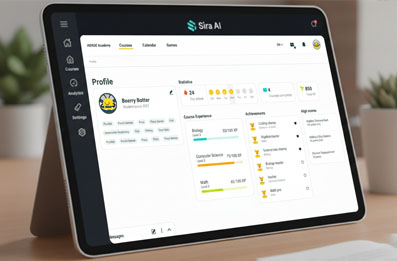
Development of Sira AI tutor and Sira Pro facilitator tools
UNESCO partnership formalized (Project 412RAF0015 with Mali Ministry of Higher Education)
$182K+ mobilized from Gates Foundation, SVCC, corporate partners
Pilot testing of Teacher Multiplier Model with early facilitators
Learning: AI can deliver expert instruction. Community facilitators can guide learning. The model works.
2024-2025:
Scaling the Teacher Multiplier
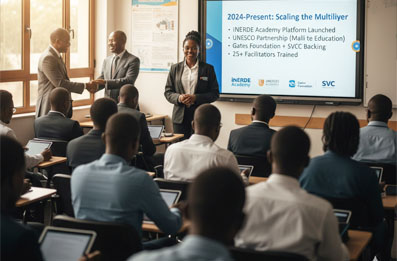
iNERDE Academy platform launches (beta)
First 10 learning pods launching in Bamako (100 students)
Pathway to 1 million STEM alumni by 2030
Expansion roadmap: Mali → Senegal → Côte d'Ivoire → Francophone Africa
Vision: Prove the model. Scale relentlessly. Transform African education.
Our Model. Our Partners. Our Impact.
The Technology:
iNERDE Academy
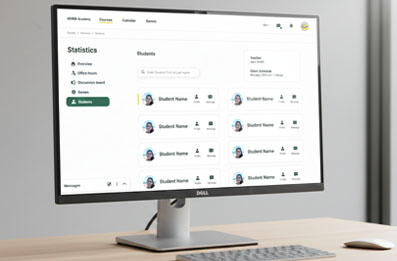
Our digital platform houses:
Sira AI Tutor: Personalized, step-by-step STEM instruction in local languages
Sira Pro: AI-powered tools for facilitators (lesson plans, student tracking, real-time guidance)
Gamification: NerdyCoins, XP tiers, Hive progression (BeeGinner → BeeYond)
Offline-first architecture: Works in low-connectivity environments
The Delivery:
Learning Pods
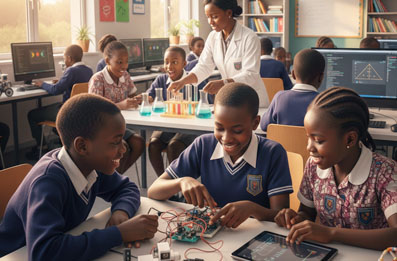
Community-driven learning in:
Homes, libraries, community centers—wherever kids gather
5-10 students per pod, 2-3 pods per facilitator
Flexible schedules (after-school, weekends)
No expensive school infrastructure required
The Partnerships: Corporate, Institutional, Community

We don't work alone. Strategic partnerships with:
Corporations: CSR funding, devices, connectivity support
Foundations: Grant funding, impact measurement, scale support
Governments: Ministry partnerships, curriculum alignment, policy advocacy
Communities: Local ownership, cultural relevance, grassroots trust

What Drives Us

Think Global, Build Locally
We bring world-class STEM education to African communities, but we design from the ground up, rooted in local culture, language, and context. No colonial education models. No imposed solutions. African-led innovation for African futures.
Brave Innovation
We're not afraid to challenge the status quo. Traditional education models are failing African children. We're building something radically different—and proving it works.
Every Child Deserves a Shot
Geography, income, and access shouldn't determine a child's future. STEM education isn't a luxury, it's a right. We're removing the barriers that keep talent locked out.
Community-Powered Scale
We don't impose solutions. We empower communities to lead their own transformation. Facilitators aren't employees, they're partners. Students aren't consumers—they're co-creators. This is a movement, not a program.
This Is Just the Beginning. Join Us.
Whether you're a corporation looking to scale impact, a community member ready to lead, or someone who believes every African child deserves opportunity, there's a place for you in this movement.
For Corporate Partners
Scale STEM education across Africa with measurable ROI and transparent impact.
For Learning Pod Leaders
Bring STEM to your community. Earn income. Transform lives.
For Supporters
Donate, volunteer, or amplify our work.

Get Involved
Resources
Connect


